Women's Resources

Tuesday, October 18, 2016

Dieta para Diabéticos e Hipertensos

Hoy te traemos 10 tips de dieta para diabéticos e hipertensos, dos condiciones muy comunes actualmente debido a nuestro estilo de vida, herencia, predisposición.
La cifra de pacientes con diabetes e hipertensión ha aumentado con el paso de los años.
Por ello es que debemos tomar medidas preventivas más eficaces, y procurar una mayor calidad de vida a los que padecen alguna o las dos condiciones.

                          b33d6f6b78b3eb0791352d2eb82644ad.jpg


1.  Elabora un plan de alimentación; en conjunto con tu médico desarrolla un plan de comidas, una adecuada dieta para un diabético. La finalidad es, ajustarte a un programa que te guíe en todas tus dudas sobre lo que sí puedes comer y lo que no debes comer.
2.  Calcula la ración de tu comida; consumir las porciones adecuadas puede ser una de las acciones decisivas al momento de cuidar una dieta para diabéticos e hipertensos. Establece un recipiente con la capacidad exacta para cada ración y guíate con las medidas para comer sólo lo que tu cuerpo necesita.
3.  Las raciones varían las porciones no; ¿qué significa esto? Mientras un niño come 60 gramos de algún alimento, la ración para un adulto será diferente. Cuida tus raciones y no alimentes a toda tu familia de igual modo, cada uno es diferente.
4.  ¿Y qué pasa con las porciones?; ¼ de la ración de la comida deberá estar conformado por cereales, ¼ por proteínas, ½ por vegetales frescos de color verde, y el ¼ restante por fruta fresca.
5.  Bebe mucha agua; el agua deberá estar calculada como mínimo 32 onzas sin importar estilo de vida, altura o peso.
6.  Evita a toda costa los malos hábitos; beber y fumar es un No absoluto para quienes padecen de estas condiciones, alteran la presión sanguínea. Son aceleradores del cáncer e impiden que los nutrientes se absorban adecuadamente en el organismo.
7.  Sé disciplinado en tu rutina; obedecer a los horarios deberá ser tu estilo de vida, pues al tener horarios regulares tu cuerpo aprenderá a actuar con balance, también te ayudará a detectar síntomas extraños o poco usuales, reconocerás cuándo alarmarte y cuándo no.
8.  Lleva una libreta; que sea parte de tu nueva forma de vivir, en ella anotarás lo que comiste, tus síntomas, tus estados de ánimo, tus niveles de azúcar y presión, y todo aquello que sea de importancia médica.
9.  Toma tus niveles a la misma hora; después del desayuno y antes de la comida, antes de la actividad física y después de la siesta. Conocer tus niveles adecuados de glucosa y presión, son esenciales para tu bitácora.
10.  Expresa que llevas una dieta para diabéticos e hipertensos; en el comedor de tu trabajo, entre tus familiares y amigos, con tus conocidos y en una ficha informativa en la cartera.

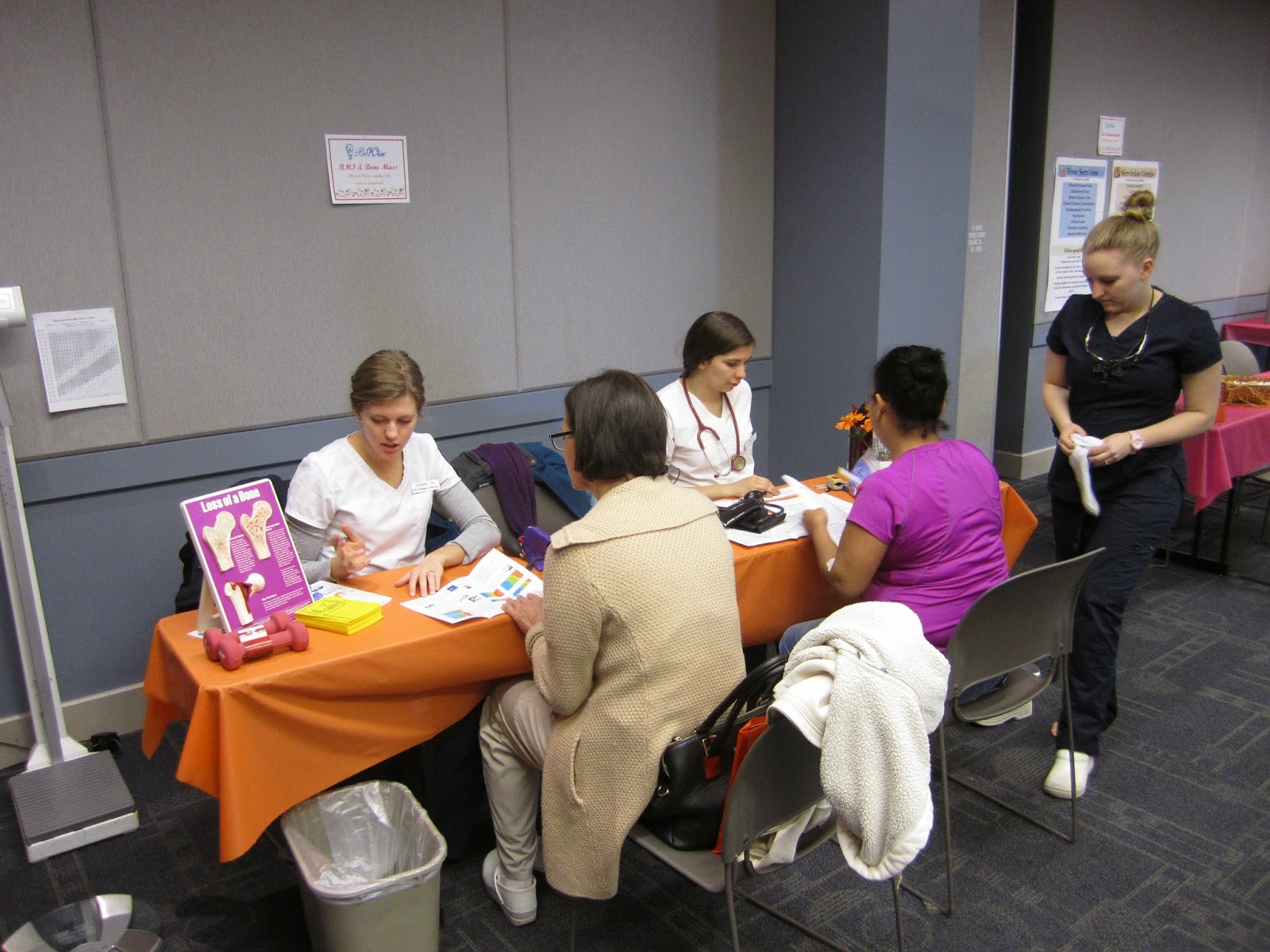
Celebration of Light Health Fair


Thank you to all of the vendors that helped make this event successful! 


and more, thank you!


We had a lot of fun at this fair and those that came had the chance to receive services such as.....
Blood Pressure
                                              Body Mass Index                                                 
Kidney Screening
Vision Screening
Bone Mass
Skin Cancer Checks
Health Insurance Info
Cancer Prevention Education
Glucose checks 
FOR FREE!

 Plus pampering, prizes, refreshments...and MORE!


There are more health fairs to come so please keep an eye out for events in the future. We would love to see you next time! 


Auto examen de mamas

Un autoexamen de mamas es un chequeo que una mujer se realiza en casa para buscar cambios o problemas en el tejido mamario. Muchas mujeres sienten que hacer esto es importante para su salud.


El mejor momento para hacerse un autoexamen de las mamas es más o menos de 3 a 5 días después del comienzo del periodo. Las mamas no están tan sensibles o con protuberancias en ese tiempo en su ciclo menstrual.
Si usted ha llegado a la menopausia, realícese el examen el mismo día todos los meses.
Empiece por acostarse boca arriba. Es más fácil examinarse todo el tejido mamario si está acostada.
  • Coloque la mano derecha por detrás de la cabeza. Con los dedos del medio de la mano izquierda presione suave pero con firmeza haciendo movimientos pequeños para examinar toda la mama derecha.
  • Luego, estando sentada o de pie, palpe la axila, ya que el tejido mamario se extiende hasta esta zona.
  • Presione suavemente los pezones, verificando si hay secreción. Repita el proceso en la mama izquierda.
  • Utilice uno de los patrones que se muestran en el diagrama para constatar que esté cubriendo todo el tejido mamario.
  Luego, párese frente a un espejo con los brazos a los lados.
  • Mire las mamas directamente y en el espejo. Busque cambios en la textura de la piel, como hoyuelos, arrugas, abolladuras o piel que luzca como cáscara de naranja.
  • Igualmente observe la forma y el contorno de cada mama.
  • Revise para ver si el pezón está hundido.

Monday, October 17, 2016

Breast Cancer Awareness Month


Beyond the Pink! From Awareness to Action
 It’s that time of year when professional athletes start wearing pink shoes, musicians bust out their pink guitars and many of the food labels in the grocery stores turn pink. Pretty soon, you’ll notice that even everyday gadgets like water bottles, staplers and hair dryers will turn pink in support of breast cancer! As fun as this time of year is, it’s also important to remember what is at the root of it all. So while you wear your pink ribbons all month long, be sure to also educate yourself about what steps you can take to reduce your risk!


 Clinical Breast Exam
Women in their 20’s and 30’s should have a health professional do a clinical breast exam (CBE) every three years. Starting at age 40, women should have a CBE by a nurse or doctor yearly. This allows for a woman to be instructed about the benefits and limitations of breast exams along with what factors in her history may increase her risk for getting breast cancer.

Mammogram
The American Cancer Society encourages women to make healthy lifestyle choices such as eating a healthy diet, getting regular physical activity, and reducing alcohol consumption to reduce their risk of breast cancer. Even women who have no symptoms  and no known risks  should have regular mammograms to help detect potential breast cancer.


 Breast Self-Exam
Women should start performing breast self-exams (BSE) as early as in their 20's. This helps women be familiar with how their breasts look and feel so they can alert their healthcare provider if there are any changes.


Wednesday, August 5, 2015

Journey to Wellbeing


Today we had our mental health class. Dr. Lynda Silva from the Intermountain Employee Assistance Program was our speaker. She had some great insights and tips into improving our wellbeing. Here are some of the highlights from the class.

First, she talked about what wellbeing is. In a nutshell, wellbeing is happiness, or our overall level of satisfaction in life. She told us about a huge study that was done to better understand wellbeing across the world. The study concluded that there are five essential elements to wellbeing.


1) Career Wellbeing: Do you like what you do every day?


2) Social Wellbeing: Do you have strong relationships and love in your life?


3) Financial Wellbeing: Are you managing your economic life?


4) Physical Wellbeing: Do you have good health and enough energy to get things done every day?


5) Community Wellbeing: Are you engaged with the area where you live?


Chances are that you're doing better in some areas than others, and that's completely normal. Most of us can say that we are doing really well in one area, but only a small percentage are satisfied in all 5. While it's easy to focus on the things we have no control over, it's important to remember that there are things we can do to improve our wellbeing in each of these categories.

Here are some of the suggestions we talked about to help improve happiness in the 5 areas.

Career
  • Try to be friends with your fellow employees. The wellbeing study determined that having a "best friend" at work can greatly increase happiness while on the job. We spend a lot of time with our co-workers, it's important to try and get along with them!
  • Make your work space pleasant by adding a personal touch through color, decorations, photos, etc. in order to help you feel happier and more comfortable with your environment. 
  • Using our talents is another great way to improve our satisfaction on the job. Try to find ways to use your talents while on the job. For example, someone who has a talent for organizing can help make the whole office happy by making it easier to find things and do their jobs.
Social
  • The study determined that we should spend about 6 hours every day socializing. If this seems like a lot, it did to us too! Keep in mind that those hours include smaller interactions throughout the day and don't necessarily have to come in large chunks of time.
  • If you work doing something that doesn't allow you to socialize, be sure to take the time on your breaks to talk to a co-worker, or you could call a friend or family member.
Financial
  • People who spend money on experiences are generally happier than those who spend money on things. Try saving to take a trip instead of buying something that you have to store and dust!
  • Find a budgeting system that works for you. Whether you pay all your bills at the first of the month or at the end, find a way to spend less time worrying about money.
  • Spend money on others! It was found that people who buy things for others instead of themselves report greater happiness after spending the same amount of money.
Physical
  • Make a shopping list and stick to it! If you don't have cookies in the house, you can't eat them late at night when you feel like snacking.
  • Find ways to be active that you enjoy and people to do them with. It's much more fun to exercise with a friend!
Community
  • Find ways to get involved that you'll enjoy, and commit yourself ahead of time. If you've already committed to be somewhere to volunteer once a month or once a week, it'll save you from having to make that decision in the moment!

While these are just a few examples, they can help get you started. Each of these elements affects the others in small and big ways, so you may be surprised at how one small change makes an unexpected impact. For example, choosing to follow a budget in order to improve your financial wellbeing may also mean you fight less with your partner/spouse about money, and so your social wellbeing improves as well. Try to choose one or two things that you can do today to help improve your wellbeing, and write them down.

These elements are the currency of a life that matters. 
Even small changes can result in better days.

Dr. Lynda Silva used the following books as references during her presentation:

Wellbeing: The Five Essential Elements. Tom Rath & Jim Harter
Now, Discover Your Strengths. Marcus Buckingham & Donald O. Clifton, Ph.D
How Full is Your Bucket. Tom Rath & Donald O. Clifton


Tuesday, July 21, 2015

Sun Safety


Summer is now in full swing, and we hope that you are enjoying a happy and safe season! 


While it's important to stay active during the summer, the hot summer months can make it hard to get the exercise you need. As temperatures soar and UV rays come down, it's important to protect yourself from sunburn and other heat-related illnesses. Here is some information that everybody should know.

Heat-Related Illness

Being in hot temperatures or exposed to the sun can have a range of consequences, some mild and some life-threatening. There are certain types of people who are more at risk for getting a heat-related illness, including older adults, children, individuals who are overweight or have health problems and those who take certain medications. The handy guide below is available from the CDC. It has good information on what to look for and what to do if you encounter someone you believe could have a heat-related illness.

Skin Cancer

One million cases of skin cancer are diagnosed each year. Even just a few severe sunburns puts you at risk for getting some type of skin cancer. It is best to avoid direct sunlight, tanning beds and sunlamps. Enjoy your natural skin or try using tanning lotion. And, don't forget the sunscreen. Cover any exposed skin with at least SPF 30 sunscreen. Lip balm with SPF is good, too.

He'll thank you for it later!


Protect Yourself

If you must be outside, take the following precautions:
  • Stay in the shade as much as possible
  • Be active during the cooler parts of the day
  • Drink lots of water
  • Be sure to use sunscreen--at least SPF 30
  • Go swimming (be sure to reapply sunscreen often)
  • Wear light-colored, breathable clothing
  • Avoid strenuous activity
  • Take breaks often
  • Protect your eyes with sunglasses
  • Watch for signs of heat exhaustion, sunburn and other heat-related illnesses

Stay Active

Getting plenty of exercise is important year round. One way to protect yourself from the sun and heat is to stay physically active from the comfort of an air conditioned room. Here are just a few ideas.
  • Join a gym or rec center
  • Do an exercise DVD or use stretch bands
  • Dance in your home
  • Go for walks at the mall

For more information visit www.webmd.com and www.cdc.gov


Friday, March 20, 2015

Garden of Hope-Health Fair


Garden of Hope 
Health Fair

We always look forward to our Health Fairs! These events are opportunities for us to serve and pamper you! We hope you enjoyed the services we were able to provide thanks to our wonderful vendors. Some of those services include: Bone Mass Screening, Vision and Hearing checks, Oral Cancer Screenings, Kidney Screenings, Glucose check, information about Happiness & Marriage, Heart Disease and help to quit smoking, and free manicures!
Here are some of the pictures we took during the event.... Enjoy!


Our next Health Fair will be September 15th & 16th from 8:30am-11:30am.
If you are a patient in our clinic and you would like to receive an email reminder about the fair in September please send me an email to leticiag@utahcounty.gov