Women's Resources

Tuesday, October 18, 2016

Auto examen de mamas

Un autoexamen de mamas es un chequeo que una mujer se realiza en casa para buscar cambios o problemas en el tejido mamario. Muchas mujeres sienten que hacer esto es importante para su salud.


El mejor momento para hacerse un autoexamen de las mamas es más o menos de 3 a 5 días después del comienzo del periodo. Las mamas no están tan sensibles o con protuberancias en ese tiempo en su ciclo menstrual.
Si usted ha llegado a la menopausia, realícese el examen el mismo día todos los meses.
Empiece por acostarse boca arriba. Es más fácil examinarse todo el tejido mamario si está acostada.
  • Coloque la mano derecha por detrás de la cabeza. Con los dedos del medio de la mano izquierda presione suave pero con firmeza haciendo movimientos pequeños para examinar toda la mama derecha.
  • Luego, estando sentada o de pie, palpe la axila, ya que el tejido mamario se extiende hasta esta zona.
  • Presione suavemente los pezones, verificando si hay secreción. Repita el proceso en la mama izquierda.
  • Utilice uno de los patrones que se muestran en el diagrama para constatar que esté cubriendo todo el tejido mamario.
  Luego, párese frente a un espejo con los brazos a los lados.
  • Mire las mamas directamente y en el espejo. Busque cambios en la textura de la piel, como hoyuelos, arrugas, abolladuras o piel que luzca como cáscara de naranja.
  • Igualmente observe la forma y el contorno de cada mama.
  • Revise para ver si el pezón está hundido.

Monday, October 17, 2016

Breast Cancer Awareness Month


Beyond the Pink! From Awareness to Action
 It’s that time of year when professional athletes start wearing pink shoes, musicians bust out their pink guitars and many of the food labels in the grocery stores turn pink. Pretty soon, you’ll notice that even everyday gadgets like water bottles, staplers and hair dryers will turn pink in support of breast cancer! As fun as this time of year is, it’s also important to remember what is at the root of it all. So while you wear your pink ribbons all month long, be sure to also educate yourself about what steps you can take to reduce your risk!


 Clinical Breast Exam
Women in their 20’s and 30’s should have a health professional do a clinical breast exam (CBE) every three years. Starting at age 40, women should have a CBE by a nurse or doctor yearly. This allows for a woman to be instructed about the benefits and limitations of breast exams along with what factors in her history may increase her risk for getting breast cancer.

Mammogram
The American Cancer Society encourages women to make healthy lifestyle choices such as eating a healthy diet, getting regular physical activity, and reducing alcohol consumption to reduce their risk of breast cancer. Even women who have no symptoms  and no known risks  should have regular mammograms to help detect potential breast cancer.


 Breast Self-Exam
Women should start performing breast self-exams (BSE) as early as in their 20's. This helps women be familiar with how their breasts look and feel so they can alert their healthcare provider if there are any changes.


Wednesday, August 5, 2015

Journey to Wellbeing


Today we had our mental health class. Dr. Lynda Silva from the Intermountain Employee Assistance Program was our speaker. She had some great insights and tips into improving our wellbeing. Here are some of the highlights from the class.

First, she talked about what wellbeing is. In a nutshell, wellbeing is happiness, or our overall level of satisfaction in life. She told us about a huge study that was done to better understand wellbeing across the world. The study concluded that there are five essential elements to wellbeing.


1) Career Wellbeing: Do you like what you do every day?


2) Social Wellbeing: Do you have strong relationships and love in your life?


3) Financial Wellbeing: Are you managing your economic life?


4) Physical Wellbeing: Do you have good health and enough energy to get things done every day?


5) Community Wellbeing: Are you engaged with the area where you live?


Chances are that you're doing better in some areas than others, and that's completely normal. Most of us can say that we are doing really well in one area, but only a small percentage are satisfied in all 5. While it's easy to focus on the things we have no control over, it's important to remember that there are things we can do to improve our wellbeing in each of these categories.

Here are some of the suggestions we talked about to help improve happiness in the 5 areas.

Career
  • Try to be friends with your fellow employees. The wellbeing study determined that having a "best friend" at work can greatly increase happiness while on the job. We spend a lot of time with our co-workers, it's important to try and get along with them!
  • Make your work space pleasant by adding a personal touch through color, decorations, photos, etc. in order to help you feel happier and more comfortable with your environment. 
  • Using our talents is another great way to improve our satisfaction on the job. Try to find ways to use your talents while on the job. For example, someone who has a talent for organizing can help make the whole office happy by making it easier to find things and do their jobs.
Social
  • The study determined that we should spend about 6 hours every day socializing. If this seems like a lot, it did to us too! Keep in mind that those hours include smaller interactions throughout the day and don't necessarily have to come in large chunks of time.
  • If you work doing something that doesn't allow you to socialize, be sure to take the time on your breaks to talk to a co-worker, or you could call a friend or family member.
Financial
  • People who spend money on experiences are generally happier than those who spend money on things. Try saving to take a trip instead of buying something that you have to store and dust!
  • Find a budgeting system that works for you. Whether you pay all your bills at the first of the month or at the end, find a way to spend less time worrying about money.
  • Spend money on others! It was found that people who buy things for others instead of themselves report greater happiness after spending the same amount of money.
Physical
  • Make a shopping list and stick to it! If you don't have cookies in the house, you can't eat them late at night when you feel like snacking.
  • Find ways to be active that you enjoy and people to do them with. It's much more fun to exercise with a friend!
Community
  • Find ways to get involved that you'll enjoy, and commit yourself ahead of time. If you've already committed to be somewhere to volunteer once a month or once a week, it'll save you from having to make that decision in the moment!

While these are just a few examples, they can help get you started. Each of these elements affects the others in small and big ways, so you may be surprised at how one small change makes an unexpected impact. For example, choosing to follow a budget in order to improve your financial wellbeing may also mean you fight less with your partner/spouse about money, and so your social wellbeing improves as well. Try to choose one or two things that you can do today to help improve your wellbeing, and write them down.

These elements are the currency of a life that matters. 
Even small changes can result in better days.

Dr. Lynda Silva used the following books as references during her presentation:

Wellbeing: The Five Essential Elements. Tom Rath & Jim Harter
Now, Discover Your Strengths. Marcus Buckingham & Donald O. Clifton, Ph.D
How Full is Your Bucket. Tom Rath & Donald O. Clifton


Tuesday, July 21, 2015

Sun Safety


Summer is now in full swing, and we hope that you are enjoying a happy and safe season! 


While it's important to stay active during the summer, the hot summer months can make it hard to get the exercise you need. As temperatures soar and UV rays come down, it's important to protect yourself from sunburn and other heat-related illnesses. Here is some information that everybody should know.

Heat-Related Illness

Being in hot temperatures or exposed to the sun can have a range of consequences, some mild and some life-threatening. There are certain types of people who are more at risk for getting a heat-related illness, including older adults, children, individuals who are overweight or have health problems and those who take certain medications. The handy guide below is available from the CDC. It has good information on what to look for and what to do if you encounter someone you believe could have a heat-related illness.

Skin Cancer

One million cases of skin cancer are diagnosed each year. Even just a few severe sunburns puts you at risk for getting some type of skin cancer. It is best to avoid direct sunlight, tanning beds and sunlamps. Enjoy your natural skin or try using tanning lotion. And, don't forget the sunscreen. Cover any exposed skin with at least SPF 30 sunscreen. Lip balm with SPF is good, too.

He'll thank you for it later!


Protect Yourself

If you must be outside, take the following precautions:
  • Stay in the shade as much as possible
  • Be active during the cooler parts of the day
  • Drink lots of water
  • Be sure to use sunscreen--at least SPF 30
  • Go swimming (be sure to reapply sunscreen often)
  • Wear light-colored, breathable clothing
  • Avoid strenuous activity
  • Take breaks often
  • Protect your eyes with sunglasses
  • Watch for signs of heat exhaustion, sunburn and other heat-related illnesses

Stay Active

Getting plenty of exercise is important year round. One way to protect yourself from the sun and heat is to stay physically active from the comfort of an air conditioned room. Here are just a few ideas.
  • Join a gym or rec center
  • Do an exercise DVD or use stretch bands
  • Dance in your home
  • Go for walks at the mall

For more information visit www.webmd.com and www.cdc.gov


Friday, March 20, 2015

Garden of Hope-Health Fair


Garden of Hope 
Health Fair

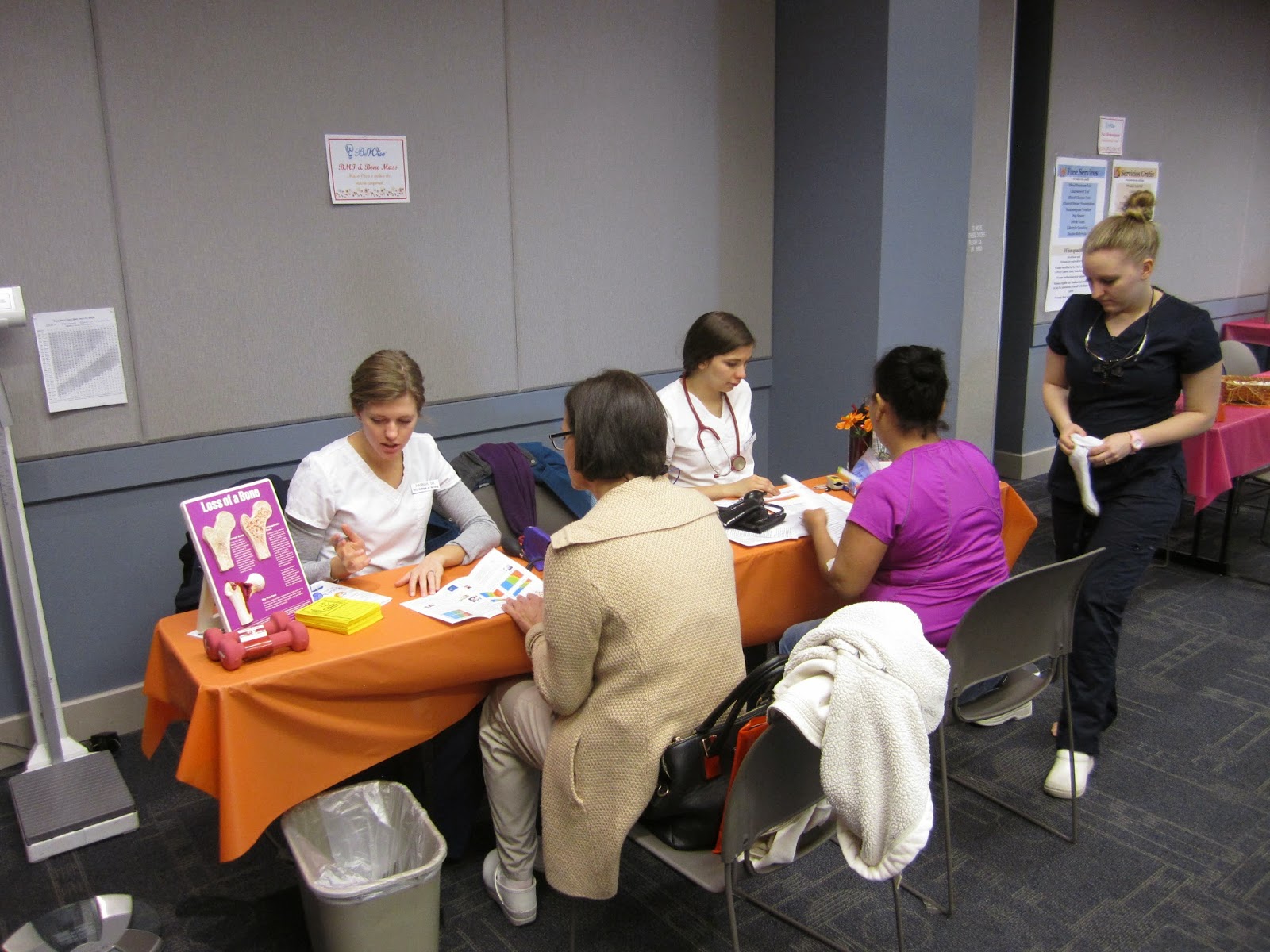
We always look forward to our Health Fairs! These events are opportunities for us to serve and pamper you! We hope you enjoyed the services we were able to provide thanks to our wonderful vendors. Some of those services include: Bone Mass Screening, Vision and Hearing checks, Oral Cancer Screenings, Kidney Screenings, Glucose check, information about Happiness & Marriage, Heart Disease and help to quit smoking, and free manicures!
Here are some of the pictures we took during the event.... Enjoy!


Our next Health Fair will be September 15th & 16th from 8:30am-11:30am.
If you are a patient in our clinic and you would like to receive an email reminder about the fair in September please send me an email to leticiag@utahcounty.gov


Wednesday, August 20, 2014

*Choose to Lose* Weight Loss Class


We had a wonderful class last week taught by one of our nurses, Nichole Graham. In this class we learned about "Healthy Portions."
Some interesting points were learning about how much it takes to burn the calories we eat. For example, a cup of white rice contains 204 calories, and it would take us 60 minutes of walking to burn. 
We talked about other examples and then we talked about the importance of eating the right size of portions. We can get the nutrients we need in usually smaller portions than what are used to eating. 
Here is an example of what a healthy portion is:


You can visit www.chooosemyplate.gov to learn how many portions of these foods you should eat per day. 

We also learned about "Portion Distortion." One example of this is seen in fast food restaurants. In the example below we notice that eating the portions we are served in a fast food restaurant means eating twice as much of what an actual serving is supposed to be. Compare the calories of the following pictures: 

We would like to share with you a handout that teaches us tips for controlling portions.

We hope you find this information helpful.
Don't miss our next class

August 27 at 11:00

Cooking Class
"Cook Once, Eat Twice"
Women's Clinic
151 S. University Ave. Provo

Thursday, August 7, 2014

Mental Health Class: "Cultivating Optimism to Increase Life Satisfaction"


Dean Barley, director of the BYU Comprehensive Clinic was our guest speaker. He received a bachelor of science degree in psychology from BYU, a master’s degree in social work from the University of Utah, and a doctorate in counseling psychology from BYU.


Cultivating optimism is another key element in improving our physical health. Optimists tend to respond better when bad things happen by: 1) not taking it personally; 2)   believing that misfortune is a temporary passing event; and 3) noticing that the misfortune doesn’t affect all aspects of their lives (I’ve still got my health!”) People who are optimistic generally do better in school, sports, getting promotions, having good relationships, and they live longer and are healthier.

-Comprehensive Clinic


Here we share some information we also found online that we think it goes along the lines with what Dr. Barley shared with us. Hope it is helpful to you


Optimists
Optimists explain positive events as having happened because of them (internal). They also see them as evidence that more positive things will happen in the future (stable), and in other areas of their lives (global). Conversely, they see negative events as not being their fault (external). They also see them as being flukes (isolated) that have nothing to do with other areas of their lives or future events (local).
For example, if an optimist gets a promotion, she will likely believe it’s because she’s good at her job and will receive more benefits and promotion in the future. If she’s passed over for the promotion, it’s likely because she was having an off-month because of extenuating circumstances, but will do better in the future.
Pessimists
Pessimists think in the opposite way. They believe that negative events are caused by them (internal). They believe that one mistake means more will come (stable), and mistakes in other areas of life are inevitable (global), because they are the cause. They see positive events as flukes (local) that are caused by things outside their control (external) and probably won’t happen again (unstable).
A pessimist would see a promotion as a lucky event that probably won’t happen again, and may even worry that she’ll now be under more scrutiny. Being passed over for promotion would probably be explained as not being skilled enough. She'd therefore expect to be passed over again.

The Differences Between Optimists and Pessimists

What's the Explanatory Style of an Optimist?

                                          By  Updated May 23, 2014


Our Next two classes will be
August 13th

at 5:30 
Weight Lose Class "Choose to Lose"

at 6:00 
Zumba